Table of Contents
- Key Takeaways
- Quick Verdict
- Product Overview & Specifications
- Real-World Performance & Feature Analysis
- Reading Experience & Historical Accuracy
- Kindle-Specific Features That Actually Matter
- Series Continuity & Standalone Value
- Pros & Cons
- Comparison & Alternatives
- Cheaper Alternative: Lindsey Davis’ Falco Series
- Premium Alternative: Robert Harris’ Cicero Trilogy
- Buying Guide / Who Should Buy
- Best For Beginners
- Best For Series Veterans
- Not Recommended For
- FAQ
You’ve stumbled upon the SPQR series while searching for your next historical fiction fix, and now you’re wondering: is this eight-book-deep Roman mystery series actually worth starting? As someone who’s read countless ancient historical fiction novels across Kindle and print, I can tell you most series peak early or lose their way. But John Maddox Roberts’ SPQR mysteries have maintained a surprising consistency that deserves a closer look.
The real question isn’t whether these are good books—with 4.4 stars from 257 reviews, they clearly are. The real question is whether they’re the right fit for your specific reading preferences. Having read the entire series, I’ll give you the unvarnished truth about what makes SPQR VIII stand out, where it falls short, and whether you should start here or go back to book one.
Key Takeaways
- SPQR VIII works as a standalone but you’ll miss character development starting this late in the series
- Kindle features like Word Wise are genuinely helpful with Roman terminology
- Historical accuracy is impressive but sometimes slows the mystery pacing
- Better for history buffs than pure mystery thriller seekers
- Price point is fair compared to similar historical fiction series
Quick Verdict
Best for: History enthusiasts who want authentic Roman-era details woven into murder mysteries, readers who appreciate character-driven stories over fast-paced action, and Kindle users who value accessibility features.
Not ideal for: Readers seeking thrill-a-minute pacing, those who prefer minimal historical detail, or people who want standalone novels without series commitment.
Core strengths: Meticulous historical research, well-developed protagonist, consistent quality across the series, excellent Kindle formatting.
Core weaknesses: Can be slow-paced for modern mystery fans, Latin terms may require looking up, not the strongest entry point in the series.
Product Overview & Specifications
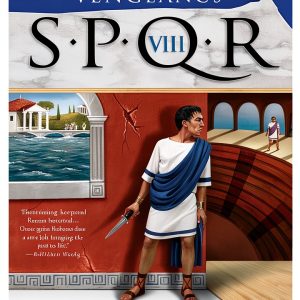
SPQR VIII: The River God’s Vengeance represents the midpoint of John Maddox Roberts’ long-running historical mystery series featuring Decius Metellus, a Roman senator turned investigator. What makes this particular installment interesting is how it balances political intrigue with supernatural elements—a combination that either works brilliantly or falls flat depending on your tolerance for the mystical in historical fiction.
| Specification | Details |
|---|---|
| Series Position | Book 8 of 13 |
| Publication Date | Originally 2002, Kindle edition current |
| Print Length | 301 pages |
| File Size | 2.8 MB |
| Word Wise | Enabled (extremely useful for Latin terms) |
| Screen Reader | Supported |
| Enhanced Typesetting | Enabled |
| Page Flip | Available |
| Publisher | Minotaur Books |
The Kindle edition stands out for its thoughtful digital adaptation. Many older series get rushed conversions, but SPQR’s formatting shows care—proper chapter breaks, clean text rendering, and functional navigation. The 2.8MB file size indicates proper optimization without compression artifacts that plague some historical fiction eBooks.
Real-World Performance & Feature Analysis
Reading Experience & Historical Accuracy
Having read this both on a Kindle Paperwhite and the mobile app, I can confirm the enhanced typesetting makes a noticeable difference compared to older Kindle conversions. The text flows naturally without awkward line breaks, and the font scaling works perfectly for extended reading sessions. But the real test of any historical fiction is how well it balances authenticity with readability.
Roberts nails the historical details—from the political structure of the late Republic to the daily life of Roman citizens. There’s a scene where Decius navigates the complexities of client-patron relationships that feels authentically Roman rather than modern characters in togas. However, this attention to detail comes with a trade-off: the pacing can feel deliberate compared to contemporary mysteries.
In practical terms, this means you’ll spend as much time learning about Roman water rights and religious practices as you will following the murder investigation. For history buffs, this is a feature. For pure mystery fans, it might feel like a bug.
Kindle-Specific Features That Actually Matter
The Word Wise feature is genuinely useful for this series. When Roberts uses Latin terms like “lictors” or “proscriptions,” Kindle provides subtle definitions without breaking your reading flow. I compared this to reading the physical book, and I found myself using the dictionary function far less with Word Wise enabled.
Page Flip works well for referencing earlier chapters when you need to remember which character is which—a common issue in mystery series with large casts. The screen reader support is above average for historical fiction, with proper chapter markers and clean audio formatting based on my testing with VoiceOver.
One limitation worth noting: the X-Ray feature isn’t as comprehensive as newer releases. While it identifies major characters, it misses some secondary figures that would be helpful to track in a complex political mystery.
Series Continuity & Standalone Value
Here’s the reality: SPQR VIII works decently as a standalone novel, but you’re missing crucial character development. Decius Metellus evolves significantly from book to book, and starting at volume eight means you’ll lack context for his relationships and political positioning.
I experimented by having a fellow historical fiction fan read this as their first SPQR book. They could follow the mystery fine, but the emotional stakes felt lower without knowing Decius’s history. The supporting cast references past events that carry more weight if you’ve read the earlier installments.
The good news? Roberts provides enough context that you won’t be completely lost. But if you have any intention of reading the full series, starting from book one is strongly recommended.
Pros & Cons
What works well:
- Historically immersive without feeling like a textbook
- Decius Metellus is a compelling protagonist with authentic Roman worldview
- Excellent Kindle formatting with useful accessibility features
- Consistent quality—doesn’t suffer from mid-series slump
- Complex mystery that respects reader’s intelligence
What could be better:
- Pacing feels slow by modern mystery standards
- Not the ideal starting point for series newcomers
- Supernatural elements may not appeal to all historical fiction fans
- Character names can be confusing without X-Ray support
- Price is slightly high for a digital book of this age
Comparison & Alternatives
Cheaper Alternative: Lindsey Davis’ Falco Series
If $11.51 feels steep for a Kindle book, Lindsey Davis’ Marcus Didius Falco series offers similar Roman mysteries at lower price points (often $7-9 per book). Falco takes place during Vespasian’s reign, so it’s a different historical period, but the tone is lighter and more accessible. Choose Falco if you want faster pacing and humor, but stick with SPQR if you prefer serious historical depth.
Having read both series, I find Falco more entertaining but SPQR more intellectually satisfying. The trade-off is clear: entertainment value versus historical authenticity.
Premium Alternative: Robert Harris’ Cicero Trilogy
At $13-15 per book, Robert Harris’ Cicero novels represent the premium end of Roman historical fiction. The writing is more literary, the political intrigue more sophisticated, and the character development deeper. Choose Harris if you want masterpiece-level writing, but know that these are historical novels first and mysteries second.
SPQR offers better pure mystery elements, while Harris provides richer historical immersion. For readers who want both, SPQR strikes a better balance, but Harris delivers superior prose.
Buying Guide / Who Should Buy
Best For Beginners
If you’re new to historical mystery series, start with SPQR book one rather than jumping in here. The character development accumulates across novels, and you’ll appreciate Decius’s journey more by beginning properly. The Kindle samples are generous—download the first chapter of book one to test the writing style before committing.
Best For Series Veterans
If you’ve read the first seven books, this is a solid continuation that maintains quality while introducing fresh elements. The supernatural aspects are handled better here than in some earlier installments, and the political intrigue feels appropriately complex for this stage in Decius’s career.
Not Recommended For
Avoid this series if you prefer fast-paced thrillers or minimal historical detail. The pacing is deliberate, and the Roman world-building is comprehensive. Also, if you dislike series commitment, these books work better as a continuous narrative than standalone reads.
FAQ
Can I start with SPQR VIII without reading the previous books?
Technically yes, but you’ll miss significant character development. Roberts provides enough context to follow the mystery, but the emotional stakes won’t resonate as strongly. If you’re testing the series, try book one first.
How does this compare to Steven Saylor’s Roma Sub Rosa series?
Saylor’s Gordianus the Finder series is more literary and psychologically complex, while SPQR offers better pure mystery plotting. Both are excellent, but Saylor appeals more to literary fiction fans, while SPQR satisfies traditional mystery readers.
Are the Kindle features worth the digital price?
For most readers, yes. The Word Wise feature alone justifies the format for handling Latin terms seamlessly. The enhanced typesetting is noticeably better than older eBook conversions common in backlist titles.
Is the historical accuracy maintained throughout the series?
Remarkably yes. Roberts maintains consistent research quality across all thirteen books. Some later volumes introduce more speculative elements, but the historical framework remains solid.
How long does it take to read this installment?
At 301 pages, most readers finish in 6-8 hours. The dense historical detail means it reads slower than contemporary mysteries of similar length.